Thursday, December 26, 2013

Ten Alzheimer’s Risk Factors

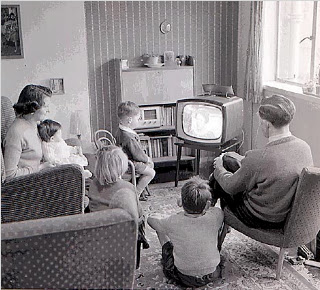
image courtesy of: globalpost.com

So what can medical science tell us about Alzheimer’s disease in terms of risk factors? What are they? Can we lessen our chances of developing AD by reducing or better controlling them? What steps have I taken as a writer/blogger to lower my own health risks?

First, lets have a look at what the latest medical science and research reveals. Next, I’ll comment on what my own corrective measures have been.

Age
On January 19th 2012, the Dr. Oz Show (www.doctoroz.com/media.print/11815) offered a download of an article entitled Alzheimer’s: 5 Greatest Risk Factors. Of the five risk factors listed, age was number one. The Dr. Oz Show article had the following to offer with respect to age:

“The biggest risk factor for developing Alzheimer’s is age. For reasons we still don’t entirely understand, as we get older, we accumulate more beta-amyloid. The chances of being diagnosed with Alzheimer’s increases steadily as we age. Right now, the risk of Alzheimer’s doubles every year after the age of 65. About half of people who are 85 and older have Alzheimer’s.”

The online web site, Caring.com  provides an informative blog by senior editor, Paula Spencer Scott. In a blog entitled, Alzheimer’s Risk Factors, What Causes Alzheimer’s Disease and Who Gets It,
www.caring.com/articles/smoking-and-weight-alzheimers-risk?print=true) Paula Scott also lists age along with gender and family history. This is what she had to say with respect to gender and family history:

Gender
“Because women live longer than men, on average, and Alzheimer’s disease risk rises with age, more women than men develop it. In addition, some research indicates that a lack of estrogen after menopause may contribute to the fact that, overall, slightly more women are affected. Taking hormone replacement therapy has not been shown to protect against Alzheimer’s.”

Family History
“People with a family history of Alzheimer’s are more likely to develop the disease. The risk is thought to rise with each relative who had it. It’s unknown, though, exactly how much of this association is due to genetic factors and how much is due to shared lifestyle factors. Most experts believe that some combination of the two is responsible. Even when an immediate family member has the disease, however, your increased risk is only slightly higher than if your family had no history of dementia.”

Lifestyle & Body Health
The Mayo Clinic published an article entitled, Alzheimer’s Disease, on January 19th 2013 on their web site, www.mayoclinic.com/health/alzheimers-disease/DS00161  The article is a fifteen page summary of Alzheimer’s disease. In it, the following lifestyle factors are mentioned.

“There’s no lifestyle factor that’s been conclusively shown to reduce your risk of Alzheimer’s disease. However, some evidence suggests that the same factors that put you at risk of heart disease may also increase the chance that you’ll develop Alzheimer’s. Examples include: Lack of exercise, smoking, high blood pressure, high blood cholesterol, poorly controlled diabetes, a diet lacking in fruits and vegetables and a lack of social engagement. These risk factors are also linked to vascular dementia, a type of dementia caused by damaged blood vessels in the brain.”

High Blood Pressure
Also known as hypertension, high blood pressure, over time, weakens the walls of the arteries. Primarily in and around the heart. What causes high blood pressure? Obesity, stress, excessive use of alcohol, too much salt in your diet, diabetes and smoking. Obesity, stress, excessive use of alcohol, diabetes and smoking each on their own have been linked to a higher probability of putting  one at risk for AD.

High cholesterol
First of all, cholesterol has taken a bad rap over the past twenty five or so years. Clarification is in order here. What is the purpose of cholesterol within your body in the first place?

Cholesterol, according to the Mayo Clinic, “is found in every cell in your body, and without it’s presence, our bodies would not function properly. One of the crucial missions that it serves is to aide in body hormone production. Cholesterol also aides your stomach and intestinal tract in food digestion. Thirdly, it serves as a structural component of each of the cells in your body.”

Cholesterol, as we have been informed, comes in three forms. The two we hear about the most and need to be aware of in terms of this article are LDL (low density cholesterol, or, the bad guys), and HDL (high density cholesterol, or, friends to have).

The  bad stuff or LDL is responsible for the plaque buildup and logjams within your arteries.
Clogged up arteries reduce the amount of blood that is essential for keeping your brain healthy. A reduced blood flow to the brain also reduces the amount of crucial glucose, or fuel, that your brain actually uses on a daily basis for optimum health.

The good stuff or HDL guards against heart problems and serves to keep the heart and arteries working properly.

Obesity
With respect to people who are overweight, the caring.com blog had this to say: “Being overweight or obese as measured by body mass index is well associated with an increased risk of developing dementia. Men with the leanest body mass index (BMI) in their late 40’s and mid 50’s were the least likely to develop Alzheimer’s in a 20-year study of more than 7,000 Swedes: those who were heaviest were most likely. This same study also later found that women who were overweight at 70 were more likely to develop Alzheimer’s in the next 10 to 18 years.”


Stress
In a blog article entitled, Women, Stress and Alzheimer’s Disease, at alz.org/blog by Dr. Neelum T. Aggarwal, Dr. Aggarwal states that stress is a risk factor for AD. She cites a 35-year study of 1,415 women that began in Sweden in 1968. The women’s ages ranged from 38 years to 60 years at the beginning of the study and they were then reexamined in 1974, 1980, 1992 and 2000. For purposes of the study, stress was defined as a sense of irritation, tension, nervousness, anxiety, fear or sleeping problems.

Dr. Aggarwal discloses that: “Of the women initially assessed in 1968, 161 developed dementia during the follow-up period of 35 years (105 diagnosed with Alzheimer’s disease, 40 diagnosed with vascular dementia, 16 with another type of dementia). The average age of dementia onset was 76 years. Stress was rated as “frequent/constant” at the baseline and follow-up cycles (1968, 1974 and 1980) was related to increased risk of developing dementia and these associations did not change when adjusted for potential confounding variables.”

Diabetes
Paula Spencer Scott’s article offered this with respect to diabetes: “People with type 2 diabetes have at least double the risk of developing AD compared with people without diabetes. The risk was 65 percent higher for diabetics in 2006 data from the ongoing Religious Orders Study of priests and nuns. Some studies have found that the higher the blood sugar levels, the higher the dementia risk.”

Smoking
Scott’s caring.com article had this to say about smoking:
“It’s thought that smoking damages the cardiovascular system and causes oxidative stress, both conditions associated with Alzheimer’s. Evidence is growing that smoking raises the risk of developing AD by as much as 50 percent.”

Head Injuries
In recent years, much has been written and televised about the connection between head injuries and dementia in later life, focusing upon our military soldiers who sustained head trauma from blast type injuries in combat. Such head injuries can lead to aggregate brain damage that is called TBI, or , traumatic brain injury.

CTI, or, chronic traumatic encephalopathy is a type of brain injury that arises from repeated impact concussions to the head. Work by the Center for the Study of Traumatic Encephalopathy at the Boston University School of Medicine is making progress on the kind of tissue and cellular damage the brain accumulates.

Symptoms of this condition present themselves as a form of dementia including loss of decision making control, aggression, depression, sleep disorders and headaches.  CTE can also lead to a higher incidence of neurodegenerative diseases such as Alzheimer’s and Parkinson’s disease.

In 2012, the National Football League donated $30 million to the Foundation for the National Institutes of Health for research studies affecting athletes, with brain trauma being the primary area of focus.

Parental Lifestyles
My mother passed away in the Fall of 2012. Mom had been placed in a nursing home 13 months prior, having been diagnosed with Alzheimer’s disease. Risk factors that weighed against her were several.

For one, she had been a lifelong smoker beginning in her teen that then continued for approximately fifty years. As Mom’s AD became more apparent, she shied away from solid foods of any kind in favor of high sodium soups. She loved any kind of soup there was as long as it was chicken soup. Second, she also suffered from adult diabetes and struggled in keeping up consistently with her diabetic medications and injections. In time, she resisted taking and swallowing her pills. A pill crusher and apple sauce or pudding were then introduced as the medication masking foodstuffs to get her to ingest what  was crucial for her. Third, mom sustained a very nasty concussion injury in an automobile accident in her early sixties.

Dad passed away in early summer, 2013 after having been placed in a nursing facility less than seven months before for dementia/Alzheimer’s disease. Dad’s risk factors were several in number as well.

First was high cholesterol from a lifelong diet heavy in buttermilk, ice cream, cheese, processed meats, and high sodium snacks. Pop loved milk! He could easily knock down a gallon of milk in a day. Salami was another. Wolfing down a whole six inch long stick of high sodium/high fat/high nitrate/nitrite salami in a day was not out of the ordinary for him. Potato chips or corn chips were another favorite; along with quarts of Picante sauce to shovel the chips into. Hershey’s chocolate kisses were another item he loved to consume as well as hand out to others. Second, he struggled with cardiovascular disease. Third, dad also developed adult diabetes in his early sixties. The last couple of years of his life before he was placed in a nursing home, my wife and I had made substantial inroads into weaning him off many of his favorite junk foods and overindulgent items. A move in the right direction but too late in the game to counter the bad effects of what had already set in.

My Corrective Measures
Well over a decade ago, and before I took on my unforeseen calling as a parental caregiver, I made several affirmative changes to my diet and lifestyle. I cut back substantially on processed meats, dairy products (cheese was my passion), and high sugar snacks and soft drinks. Exercise and physical activity increased and my weight and waistline began to diminish. Salads, fruits and vegetable consumption have been my focus for quite some time. My wife has introduced a substantial number of organic based food items into our diet as well.

My primary care physician was delighted with the results of my physical exam, as much as I was, in early December 2013. I was within seven pounds of my optimum weight goal, blood panels were all good for cholesterol, blood sugar and other vitals. No signs nor symptoms of heart issues. Blood pressure and pulse are boringly normal.

Occasionally I have been asked if I worry a lot about eventually developing Alzheimer’s disease myself? The answer is No, I do not.

What will be will be. In the meantime, it is my belief that taking charge of and making affirmative changes in my lifestyle choices some twelve to fifteen years back most certainly have lowered my risk factors for developing one of the dementia's, diabetes or cardiovascular disease.

Education, empowerment and self discipline have been my tools. My disappointment in a way is that much of what we now know about AD and dementia was not out there or available to my folks in their younger years to avail themselves of.

Sometimes, during the course of caring for those that are dying or very ill, your takeaway is that you learn how to live better or differently for yourself. This has been so for this writer.

Jeff Dodson
December 26th 2013

Monday, December 2, 2013

Stop Drifting, Start Rowing A Book Review


Reading this book, Stop Drifting, Start Rowing, has been my first exposure and introduction to Roz Savage, the author. Besides writing this particular book about her 2007 - 2010 solo rowing expedition across the Pacific Ocean, she previously took on and successfully solo rowed across the Atlantic Ocean in 2005 as well as a solo rowing adventure across the Indian Ocean. 

Roz Savage is a passionate environmentalist, public speaker and book author. She wrote a book prior to this one entitled, Rowing The Atlantic, Lessons Learned On The Open Ocean.

As I read, Stop Drifting, Start Rowing, a handful of descriptive phrases arose in my mind that I would employ to describe Roz Savage.  Among them were single-minded determination, tenacity, focus, courage, discipline and resolve.

How many of us, would have the vision and daring to set out upon a quest to row across any of our world’s oceans by themselves in just a 23 foot long rowboat? 

Setting out on such a  challenge also involves a substantial number of behind-the-scenes sponsors, suppliers, weather forecasters, technical and medical consultants, the US Coast Guard, and the maritime authorities in other world nations.

Roz Savages’ account of her rowing expedition across the expanse of the Pacific Ocean is an amazing one indeed. The details of her journey are educational, compelling, and downright scary at times. 

Imagine being caught in a storm or squall at sea in the middle of a black night, having yourself lashed into your sleeping bag, then having your boat capsize. Not just once, but multiple times during the night? How many of us would be able to keep calm and focused? Would any of us ever get accustomed to that kind of situation? Or how about getting caught fighting your way rowing against a prevailing ocean current that pulls you in the opposite direction, for days at a time? Then there are  the days of sweltering heat at sea under an unforgiving sun with times where your water supply is running low due to a malfunctioning water maker.

While navigating the open Pacific, Roz documented what she observed on her odyssey in terms of marine aquatic and avian life. She also reports about  environmental issues such as the shocking floating  trash heap, known as the Great  Pacific Garbage Patch, a Texas-sized collection of human manufactured trash, and the shocking decline in the oceans’ fish populations due to irresponsible over fishing.

Roz Savage’s narrative of her journey along with her intermittent blog entries make this book a rewarding read. I learned a lot about the world’s oceans from what Roz shares as well as the beauty, majesty and awesome power of Mother Nature on the high seas.
For more information about this courageous author, visit her web site at www.rozsavage.com

I loved the simple quote from Roz that she offers in this book. It is, “You have one life. Live it.”


Jeff Dodson
December 2nd 2013

FTC Disclosure:  I received this book for free from Hay House Publishing for this review. The opinions expressed in this review are unbiased and reflect my honest judgment of the product.


Saturday, November 30, 2013

How Far Have We Come?


So just how far have we come with respect to our understanding and treatment of diseases pertaining to mental health, dementia and Alzheimer’s disease? How has funding for research come along and progressed? 

How about our progress in just this writer’s lifetime? That, of course, would be sixty two years. Where do we stand as of late November 2013?

I spent some time recently digging into these topics and decided to lay it all out in a time line type fashion.

Let’s see, in the year of 1951, the year that I was born,  prefrontal lobotomies were all the rage. An  estimated 50,000 lobotomies were performed in the United States between 1936 and 1960. These were the concocted answer to reducing the violent or distressing behaviors of folks afflicted with schizophrenia, manic-depression (bipolar disorder), etc.  Dementia patients were also sometimes handled in this manner.

As of 1951, the National Institute of Mental Health, established by the National Mental Health Act in 1946 is now just five years old.

1952 
Chlorpromazine, an anti-psychotic drug, known by the brand name as Thorazine, was developed and introduced in 1952. It became the medication of choice as a “mood-calming” drug for use in the psychiatric wards. The use of this drug and others that followed helped reduce the use of the barbaric lobotomies that began in the late 1930’s.

1954
The number of hospitalized mentally ill people reached its peak in England totaling nearly 150,000. 

1955
The number of hospitalized mentally ill citizens in the United States reached its peak at  560,000. 

June 25th 1962. The United States Supreme Court, in the case Robinson v. California, held that drug addiction, is a disease rather than a crime. This forgotten fact surprised me at how our society’s attitudes have changed in  fifty one years or the equivalent of just two generations.

October 31st 1963, President JFK signed into law the Community Mental Health Centers Act. This was part of JFK’s New Frontier, and intended to provide federal funding for community based mental health centers. Only half of the centers would ever be built. None of them were ever fully funded, and the Act did not provide operational funds for the long term. Its enactment would eventually open the door to the deinstitutionalization that would come in the 1970’s.

1968
 Researchers come up with the first validated measurement scale for determining cognitive and functional mental decline in older adults, paving the way to correlate the level of impairment with estimates of the number of brain lesions and the volume of damaged tissue. A step in the direction of better understanding dementia and other brain diseases.

The period between 1970 through 1980 became known as the period of Deinstitutionalization, or as some called it, the “Era of Disowning Responsibility.” State Asylums and Psychiatric Hospitals began to shut down or close. Mental health patients were either dumped on the streets or into the laps of the local communities. As a resident of California, I can recall hearing my folks complain of how, then Governor Ronald Reagan, was taking steps to do this in our state. Pop used to say, “Now they’re all gonna be dumped out on the streets. Who is gonna step in to look after them all?”

December 23rd 1971. Congress passed the National Cancer Act; with this action, the so-called “war on cancer” was launched. Funding for research grows from 233 million annually to nearly 5 billion by 2008. (By way of comparison here, funding for Alzheimer’s disease begins in 1980 with just $13 million dollars).

In 1973 the American Psychiatric Association declares that homosexuality is not a form of mental illness. This was just forty years ago that the APA stepped away from Stone Age thinking about a substantial number of our citizens.

1974 
Congress enacts legislation establishing the National Institute on Aging (NIA) as one of our National Institutes of Health. The NIA will become our primary federal agency supporting Alzheimer’s research.

1976 
Neurologist Robert Katzman identifies Alzheimer’s disease as the most common cause of dementia and a major public health challenge in his editorial published in Archives of Neurology.

1980 
The Alzheimer’s Association is formed. This is also the year that the NIH begins funding for Alzheimer’s research with $13 million dollars.

1982 
The Alzheimer’s Association, a private organization, begins funding research on its own. Between 1982 through 2013, they will have committed more that $220 million to best-of-field research proposals.

1983 
Awareness of Alzheimer’s disease increases, leading Congress to designate November 1983 as the first National Alzheimer’s Disease Month.

1984 
Beta-amyloid is identified. Researchers George Glenner and Cai’ne Wong identified a “novel cerebrovascular amyloid protein,” known as beta-amyloid - - the chief component of Alzheimer’s brain plaques and a prime suspect in triggering nerve cell damage.

The NIA begins funding its network of AD Centers at flagship medical institutions, establishing a nationwide infrastructure for research, diagnosis and treatment.

1986 
Tau protein, a key component of tangles - - the second pathological hallmark of AD and another prime suspect in nerve cell degeneration is imaged and studied.

1987 
The first Alzheimer’s Drug Trial is initiated some eighty two years after Dr. Alois Alzheimer first diagnosed AD, naming it, “the disease of forgetfulness.” (In German, “die Krankheit der Vergesslichkeit” ).

December 29th 1987. The FDA approves Prozac as a new medication for depression. Prozac goes on to become the most prescribed antidepressant drug worldwide.

The Alzheimer’s Association aides the NIA and drug pharma, Warner-Lambert (now Pfizer) in launching and recruiting participants for clinical trials of tacrine, the first drug specifically targeting symptoms of AD. 
The first deterministic Alzheimer’s gene is identified on chromosome 21 that codes amyloid precursor  protein (APP).

1991 
The NIA establishes the Alzheimer’s Disease Cooperative Study (ADCS), a nationwide medical network to facilitate clinical research and conduct federally funded clinical trials.

1993 
The first AD risk factor gene is identified as APOE-e4, a form of apolipoprotein - E (APOE) gene located on chromosome 19 as the first gene that raises the risk factor for AD but does not determine that a person who has it will develop the disease.

The FDA approves the first AD drug tacrine (Cognex). Four additional drugs are approved over the next 10 years.

1994 
Former President Ronald Reagan shares with the American people that he has been diagnosed with AD.

The first World Alzheimer’s Day (WAD) launches on September 21st by Alzheimer’s Disease International.

1995 
The first transgenic mouse model that developed AD-like brain pathology is announced.

1996 
Dr. Alois Alzheimer’s original patient file and study records on August Deter, lost since 1909, are found in a basement among old records on a university campus in Frankfurt, Germany. Following the rediscovery of these records, a modern peer review of Dr. Alzheimer’s work will be conducted to audit and authenticate the accuracy of it. The review discloses that Dr. Alzheimer’s original work was meticulous, thorough and spot on.

1999 
The first in a series of reports is published showing that transgenic “Alzheimer’s” mice with beta-amyloid prevents the animals from developing plaques and other AD-like brain changes.

2003  
National Alzheimer’s Disease Genetics Study begins in a partnership between the Alzheimer’s Association and the NIA. The study is initiated in order to identify additional AD risk genes.

2004  
Researchers at a major international AD conference announce the use of an imaging agent called Pittsburgh Compound B (PIB), a major potential breakthrough in disease monitoring and early detection.

2005  
The Alzheimer’s Association launches a Dementia Journal, Alzheimer’s & Dementia: The Journal of the Alzheimer’s Association in an effort to further support a global interdisciplinary exchange within the AD research community.

2008  
The International Society to Advance Alzheimer Research and Treatment is formed.

NIH funding for AIDS research is $2.9 billion. For cancer funded research it is $5.5 billion. According to the National Cancer Institute, cancer research funding between 2007 - 2013 will average approximately $4.9 billion a year. For 2008, the NIH Alzheimer’s research budget is $412 million.

2009 
The International Conference on Alzheimer’s disease becomes an annual event.

As of 2009, 4.5 million Americans suffer from the severest form of brain disorders - - schizophrenia and manic-depressive illnesses. Out of that, 1.8 million are not receiving any kind of treatment on any given day. This results in homelessness, incarceration and violence. 

2010  
An Alzheimer’s clinical trial database is established for the first time. 

2011 
President Obama signs the National Alzheimer’s Project Act (NAPA) into law.

2013 
The NIH research budget for Alzheimer’s is $449 million. On September 19th 2013, the NIH added another $45 million to this  fund.

The 2013 World Alzheimer’s Report revealed, among other things, that AD is now the 6th leading cause of death in the United States. An estimated 450,000 people will die from AD this year. 2.3 million caregivers are considered long-distance caregivers in that they live  one hour or more away from their care recipients. The total expenditure for Alzheimer’s dementia care in 2013 is approximately $203 billion. By the year 2050, at its current growth trajectory, Alzheimer’s dementia care will rise to $1.2 trillion. 

It is now late November 2013. As of this date, we still have only six FDA approved medications on the market for AD. None of them stop the disease and none of them cure it.

As of this writing, Thursday November 22nd 2013, the Alzheimer’s Association’s latest e-mail sent to me this morning, states that AD is now the costliest disease in America, surpassing heart disease and cancer.

It is apparent that we still have much to do with respect to funding Alzheimer’s disease research and changing our attitudes and approach in how we deal with members of our society who struggle with mental illness. We all need to become better informed and active participating citizens.


Jeff Dodson
November 30th 2013


Saturday, November 9, 2013

Melancholy Alley


As a kid growing up in South Sacramento, I loved exploring alleys. I guess because they aroused my sense of curiosity. What were they for? Where did they lead to? What would I find in them if I entered and followed them? Gee, what a great place to build a kids hideout or maybe even a fort!

My grandmothers house sat just three doors away from one. My childhood home on Phyllis Avenue had one right behind the back fence (all right, technically, that one was a utility company right-of-way easement). Spent plenty of time playing in and exploring them both with my brothers and neighborhood kids.

That was all fifty plus years ago.

Recently, I have found myself traveling  what I consider a different kind of alley. My name for it is Melancholy Alley. A lane that runs roughly parallel to the path that I wish to travel but not very inviting. Mostly empty other than a few rubbish cans here and there along the way. As I walk by each, I chance to quickly peer into the top of those without lids. Rather than trash, what seems to be stuffed in each are old memories, a few regrets, and the odd box containing that great guilt inciting title; “if only you had done this instead.”

In my minds eye, I see myself walking this alley several times each week, slowing my pace to glance at what lies in each of the cans and receptacles along the way. The colors and light that would normally enliven and enrich the scenery are muted. Washed out and without vibrancy. If any of you ever saw the Denzel Washington movie, The Book of Eli, that is the kind of washed out color look that I am talking about. 

I feel like I have become an observer of my life rather than a participant. Engagement has become replaced by detachment. Separation. As if someone pulled the plug on me and overlooked plugging me back in.

 “I don’t want to do anything today. Maybe spend the whole day just napping. Go to work, come home, keep the drapes drawn, stay indoors. All prior outdoor projects and household fix-it tasks no longer hold an interest or priority. I am de-energized.”

The  vitality is missing. I want it back. Let me be 100% present once more.

The grief counselors and psychologists call it mourning, depression or lethargy. Struggling with the aftermath of the death of someone close. No shit. Three as a matter of fact. First, mom Dodson, then my mother-in-law, then pop Dodson. All within the past nine months. 

So this afternoon, I put it down in words; what these feelings, emotions and imagery have been like. 

This is not the kind of blog posting I originally intended for this web site. 

Up to now, I have been all about providing caregiving information for dementia folks and positive, educational books about  spirituality, compassion and how amazing and courageous we humans can be.

I look upon this particular essay as a one-time sharing exercise and hopefully, a personal exorcism of a mild lethargic depression that seems to have clogged up and slowed down my polished, well-oiled writing machinery.

Do not feel or sense alarm for this writer. This is something we all must work through in our own way. No one else can bear the yoke of this wagon for us. I will emerge on the other side none the worse for wear, stronger and more resilient that I was once before. 

A loving and devoted family helps. 

A loving and devoted wife is even better and who does not realize that she is my ace-in-the-hole card. She, in addition to a nearly four month old granddaughter who is as cuddlesome and sweet as they come. Two feminine personalities with spirits that trump all negativity. My wife came factory-equipped with her own gossamer wings firmly attached. Granddaughter shows the tell-tail signs too with two little nubbies under the skin and behind her shoulders. Call ‘em wing buds.

It is uplifting and so true about what the wise old sage once said: “No storm lasts forever.”

I am close to stepping out of my Melancholy Alley. I found an unlocked gate and a path between two buildings leading out to a busy and bright sunlight lit street


Jeff Dodson
November 9th 2013


Tuesday, October 22, 2013

A Book Review of One Mind


The book, One Mind, is an amazing read. It successfully tackles a subject that, for some, is a formidable “out there” topic.  For a substantial number of folks though, Dr. Dossey’s work and research will validate their experience and feelings that we are all connected to our Source, our Creator, but definitely something that could be looked upon as Divine.

The subject of this book is the existence of a timeless, ageless universal conscious intelligence source that we are all part of and have access to. It has been described as a WiFi system that we all are equipped with at birth. Further, a WiFi system that every living thing upon our planet comes with to not only connect with others of their own kind but across the range of other species of living things as well.

What  I liked about the book.
The depth and breadth of research that went into it this book is evident as you dig into it. It is almost like an encyclopedic textbook. Dr. Dossey left no stone unturned in his gathering of stories, research and investigative material. One Mind is thorough in its composition and compelling in the premise that is showcased.

What I learned from this book.
1.  A comprehensible explanation for what quantum mechanics physicists postulate as entanglement theory.  Entanglement theory, a hard science definition meant to address specific observed actions of subatomic particles, as it turns out, may well be a fundamental description of a spiritual event that underscores a universal consciousness, a single mind, accessible by all.

Chapter Four offers this:
“An object is said to be entangled if it cannot be fully described without considering one or more additional objects; it is as if the separate, distant entities comprise a single system. Entanglement has been experimentally verified many times over the past three decades and is accepted by the majority of physicists as a fundamental feature of nature”.

Nonlocality is considered to be the mechanism for the effects of entanglement. According to physicist Nick Herbert, “A non-local connection links up one location with another without crossing space, without decay, and without delay.” These connections have three identifying characteristics, says Herbert. They are unmediated (no connecting signal is involved), unmitigated (the strength of the correlation's does not fade with increasing distance), and immediate (they are instantaneous). The implications of entanglement and nonlocality are stunning.”

2.  Near death experiences (NDE’s) and their related variants.
“ A Gallup Poll in the 1980s estimated that approximately 13 million Americans had experienced an NDE. One study found that, statistically, every day in the U.S. nearly 800 people have an NDE.”

Dr. Eben Alexanders bestseller, Proof of Heaven: A Neurosurgeons’s Journey into the Afterlife, is acknowledged in One Mind for how it describes Dr. Alexanders own extraordinary NDE.

Variations of the NDE include near-death-like events, the fear-death experience associated with the acute fear of imminent death such as falling during mountain climbing or being involved in a terrible auto accident. There is also the nearing-death experience that may arise during the gradual drawn-out process of dying from say a lingering, lethal illness. Finally, there is also the shared-death experience which can happen not to people that are dying but to people who are in the proximity of the loved one who is dying. They can happen to more than one person at the same time.

One element of a shared-death experience that the author writes about: “is the emission of an apparent mist from the dying person, often described by onlookers as steam, fog, or white smoke, which often assumes a human shape.”

This describes exactly what my wife and I both witnessed while present at the ICU bedside of my brother Tim when he passed away in 2005.

3. Telesomatic events and what they are about.
“In the 1960s, the American neuropsychiatrist Berthold E. Schwarz coined the term telesomatic from words meaning “distant body.” Schwarz documented events in which individuals experience similar sensations or actual physical changes, even though they may be separated by great distances. Hundreds of telesomatic events have been reported over the decades. They suggest that the persons involved are somehow linked through consciousness, as if two bodies were sharing a single mind.” Here, the  definition of Dr. Schwarz sounds a lot like the essence of entanglement theory.

Who else would enjoy  this particular book?
Anyone who has ever lived through a NDE or one of it’s variations that has been presented in this book will find Dr. Dossey’s work a fascinating one. It will also prove to be an interesting read for anyone else who is possesses a curiosity about how the human mind works and how it may operate outside of itself, connected with others and offering a link with those who have preceded us in death.

I loved the quote that preceded Chapter 10, Immortality and Near-Death Experiences by Emily Dickinson: “The only secret people keep is Immortality.”

One Mind is not a Cliff-Notes quick read nor was it meant to be.

The depth of material contained within it demands your focus. You should also bring along your curiosity and wonder besides your reading glasses. I spent a week getting through it and enjoyed the richness of documentation and the amazing number of heartwarming personal stories shared within about folks and their highly spiritual as well as sometimes paranormal encounters.

One Mind, for me, was an educational, thought-provoking  and inspiring read.

A link to the author Dr. Larry Dossey is: www.dosseydossey.com

Jeff Dodson
October 2013

FTC Disclosure
I received this book free from Hay House Publishing for this review. The opinions expressed in this review are unbiased and reflect my honest judgment of the product.

Saturday, September 14, 2013

Private Access


At the moment of birth, each one of us comes equipped with an internal private door to our Spirit. That is the access passage way our Creator provided for us all. The door has no lock, no bolt, not even a door knob or handle. It is merely a hinged swinging door. When we emerged from the womb, the door was fully open, an invitation to guidance and for our private messages to be sent back through.

It is a door rather than a hallway because our Creator provides us with the choice of staying connected to Him in a relationship, or the independent option of closing the door on occasion as some might wish to. The doorway of private access always remains as a choice option, not one that is forced or compelled.

For a small number of folks, their private door remains open throughout their lives. Being used as intended for:

Spirit-mail incoming
Receive incoming guidance and wisdom from our Source when it is needed.

Spirit-text message outgoing
To send out prayers for assistance in time of dire need, uncertainty or trying times.

Sadly, for a substantial number of people, they spend a large portion of their lives barricading up or sealing that private doorway. It is apparently looked upon in the same way as our appendix is. As an ancient archaic organ that no longer serves our needs.

Cut off from Source, personal fulfillment is sought out externally in the physical world around us. Pursuit is then taken up warehousing and accumulating wealth, property, fame or notoriety as a means of building or bolstering a sense of purpose, a sense of self-worth.

None of it can accompany you where you travel to after your time here. That is why caskets and burial urns do not feature luggage racks, cargo nets or beverage holders. It all remains behind for families and lawyers to quarrel and squabble over.

In the past, I have written about this access to our Source as our own internal “Wi-Fi connection.” My view remains the same. We come into our physical world already equipped for ultra-fast, ultra-bandwidth two way Spiritual connection.

Keeping this doorway, this Wi-Fi connection open, has been my most treasured secret in my work as a caregiver for nearly the past decade. It has kept me sane, grounded, without major illness and positive in Spirit. It has done the same for my wife Penny.

Go deep. Go within. Rediscover your open doorway. If you misdirected negative energy in the past by boarding it up, re-direct positive energy in clearing that doorway once again.


Jeff Dodson
September 14th 2013

Monday, September 2, 2013

Directing Your Destiny


Jennifer Grace’s book, Directing Your Destiny, was an intriguing read.

It is the first book I have ever read that combines all of the effective self-change techniques into one integrated approach.  Jennifer adds further spice and power to her instructive how-to book by sharing with the reader a number of motion picture industry techniques that are adaptable to guiding and assisting one in a personal growth transformation.

The book is arranged and set up to provide the reader with the equivalent of a month long training program designed to propel you through a substantial personal growth experience. It is written in a step-by-step fashion and easy to follow.

Week One’s instructions and lesson is How to Become the Writer of Your Dreams. This is where you are taught to become more mindful by cultivating an awareness to build your dreams, to begin meditation that will instill clarity in discovering your dreams, and to begin journaling as a means of writing down and capturing your dreams. According to Jennifer, “Journaling is an excellent tool for intellectual, psychological and spiritual growth. It moves you closer to your real feelings.”

Week Two covers Becoming the Producer of Your Dreams. What are the things that stop you from moving forward fearlessly? What is it that takes you out of your personal power?  Intentions, written down in a declarative fashion about a future goal that you have already achieved and the positive emotional state that underscores it’s completion are introduced as one of the tools of change. You are beginning the process of reprogramming your belief system including learning how to neutralize those “hecklers that live inside your head.”

Week Three covers more of Becoming the Producer of Your Dreams. Cultivating truthful emotions to feel your dreams and validate them. Applying a tool set known as the Authentic Frequency Method (AFM). You write out a script from your imagination that you’d like to star in. Imagine that it is real. Borrow the strong positive emotions from one of your most positive memorable events and substitute that feeling in place with the script you are striving to bring to life. Then run the script and those borrowed strong emotions as a mind movie before you meditate.

Week Four concludes instruction with Becoming the Director of Your Dreams. Learning to work with the Law of Action. Putting into motion the vision that you have crafted. Time will never be found to accomplish something. You instead must create the time. Use the Dream Storm approach. There may be no’s that arise before a yes occurs with each of your dreams. Trust in and surrender to your source. Let go of expectations about how things will turn out.

In Directing Your Destiny, I liked what I learned about the following topics:

The use of Journaling
Differs from just keeping a diary. Journaling serves to provide you with access to your own personal truth, your dreams and inner wisdom. Journaling is one of the tools advocated by Jennifer in this book. I never kept a diary. I have never written a journal, until now. Clarification of how powerful the latter is helps. Journaling provides one with the opportunity to drill down deeper into your thoughts and feelings.

The Five Senses Check-in
A technique of focusing on each one of our individual senses as part of a meditation practice session. Meditative concentration begins first with sight, then smell, sound, touch, then finally taste. Focusing on each one of these senses one at a time works to shut out random wandering thoughts that may arise to break or sabotage your meditation period. It keeps you on track during your periods of meditation.

Beliefs vs. Facts
The author writes, “A fact is a verifiable truth. A belief is what someone has decided is the truth. It may or may not be verifiable. But a fact is a fact and cannot be changed. You can, however, always choose what you believe. It doesn’t matter how long you’ve held on to a belief or where it came from. You can adopt a new one whenever you choose.”  Many of us have journeyed through our lives burdened with beliefs about ourselves that began in childhood which, over the years, we came to view as facts. They never were factual truth, which makes them eligible for discarding or dismantling.

Dream Storming
Creating action steps to bring your intention or dream to fruition. Starts with an intention written in the middle of a sheet of blank paper. The rest of the space is to write in the action steps you will need to take to make that particular intention or dream a reality. The next step then will be prioritizing three of the action steps and holding yourself accountable with a time deadline on each. A technique that serves to start the flywheel of change into motion.

Each of the four weekly programs concludes with Director’s Notes which are reinforcing summary notes of the material,  and a Soulwork assignment which are to-do action steps to take.

Unhappy with your present circumstance in life? Feel like you are stuck at a plateau and cannot find your next transmission gear? Grab a copy of this book. The tools and techniques within are easy to follow and just may serve to launch you into the life you were meant to  be living.

For more information about this author and her work, visit her websites at: www.jennifergrace.com and
www.thecenterofgrace.com


Jeff Dodson
September 2nd 2013

FTC Disclosure: I received this book for free from Hay House Publishing for this review. The opinions expressed in this review are unbiased and reflect my honest judgment of the product.