Monday, February 24, 2014

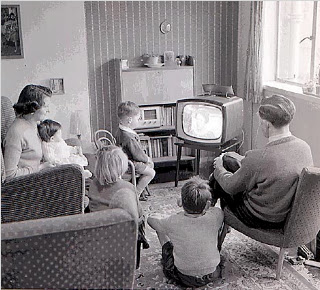
Five Cultures That Revere Their Elders

image: islandandcities.tumblr.com

So just what are some of the cultures today that show reverence and respect to their elder citizens? Are they any at all? Why do I even bring this topic up?  

As a caregiver, I was faced with having to place an aging demented parent in a skilled nursing facility. Three different parents, three different times. All of them are now passed. God Bless each of them. They all went home within a nine month period. In each nursing facility I was able to observe just how many seniors actually received visits from close family members. On a scale of 1 to 100, perhaps 8 to 10 percent received regular visits from a family member on a weekly basis. Another 20 percent received visits maybe once a month. The other 70 percent received a family member of friend to visit them at maybe their birthday, at Thanksgiving, or at Christmas or not at all.

American Culture, the one that I was brought up in, seems to be skewed one way. It worships independence and youth. It appears to be infatuated with overnight fame, immediate gratification and a preponderance of activities that glamorize the young along with products that claim to stave off aging or the appearance of growing old.  

We are enthralled with “selfies,” (self-shot, cell phone photos), building ‘personal brands,’ and spending enormous amounts of time texting and posting upon Facebook, Tumblr, Instagram, Pintrest,  etc. Who bothers to just sit down and talk face to face with another person anymore without the presence of a vibrating cell phone or I-Pad in their hand? And when was the last time you actually talked to a grandparent or aging parent face to face or visited with them?

American culture devalues and marginalizes it’s elderly and seniors.

Some writers attribute the decline in how we view our seniors and the elderly to the so called Feel Good Generation of the 1960’s - 70’s. A period that sensationalized youthful self centered and self-indulgent activity. 

In researching the web prior to composing this blog, it turns out that there are others out there with a much more scholarly background who are asking the same question.

Jared Diamond, UCLA professor of geography and physiology, recently lectured on this topic. His presentation was entitled, “Honor or Abandon: Why Does Treatment of the Elderly Vary so Widely Among Human Societies?” Jared Diamond is a Pulitzer Prize winning author of “Guns, Germs, and Steel: The Fates of Human Societies,” which also aired on PBS. Diamond is also a recipient of a MacArthur Foundation “genius” award.

In the online newsletter, UCLA Today, I read a summary of Dr. Diamond’s address, a portion of which is conveyed here.

“Parents and children both want a comfortable life --- there are limits to the sacrifices that they’ll make for each other.” Those circumstances include life’s often heart-wrenching realities --- from the threat of starvation among indigenous tribes to the difficult choices posed by modern societies’ life-prolonging medical care.

The elders usefulness in a society plays a big part in determining their fate, Diamond said. While old people in traditional societies can no longer spear game or battle enemies, they can still gather food to care for children.  They are also often expert at making tools, weapons, baskets and clothes. In many societies they serve as “tribal elders” in medicine, religion and politics.

In those cultures that lack a written record of their history, song  and other forms of culture, older people are invaluable sources of information.

“The repositories of knowledge are the memories of old people,” Diamond said. “If you don’t have old people to remember what happened 50 years ago, you’ve lost  a lot of experience for that society.” from communal history to advice on how to survive a cyclone 
or other natural disaster.

So what cultures out there embrace, include and revere their older citizens today?

I was surprised to learn the following about these five different cultures.

African

There are more than five hundred tribes that occupy the African Continent. Common among them is that  elders are respected, obeyed and considered a source of tribal and family wisdom. 

To survive until and old age is often considered an accomplishment reflecting personal strength, resourcefulness and faith.

American Indians
Native Americans are known for referring to their elders as “wisdom keepers.”

The web site: www.sapphyr.net/nacodeethics.htm features a detailed list of behaviors shared by a number of Native American Tribes. The article is entitled, Native American Indian Traditional Code of Ethics. This code first appeared in print in the book, The Sacred Tree, published by The Four Worlds Development Project in 1982.

I’ve listed here those that speak to the treatment of older tribal members.

1.   Treat every person from the tiniest child to the oldest elder with respect at all times.

2.   Special respect should be given to Elders, Parents, Teachers and Community Leaders.

3.   Touch nothing that belongs to someone else (especially Sacred Objects) without permission, or an understanding between you.

4.   Speak in a soft voice, especially when you are in the presence of Elders, stranger or others to whom special respect is due.

5.   Listen to and follow the guidance given to your heart. Expect guidance to come in many forms: in prayer, in dreams, in times of quiet solitude, and in the words and deeds of wise Elders and friends.

Chinese
China owns some of the oldest cultural rituals dedicated to the reverence of their oldest citizens including these which are but a sampling:

1.  The oldest person in a family or an organization has the most respect, honor, and dignity.

2.  Young folks will call an older person “Ye Ye” (grandfather), and “Nai Nai” (grandmother), “Tai Tai” (aunt) and “Shu Shu” (uncle) as a sign of respect even if that person is not family by blood.

3.  When you arrive at a meeting or banquet you should always remember to greet the member with the highest seniority ranking at that occasion first.

4.   Whatever you do, you should not ever interrupt the senior member’s speech.

Japanese
The Japanese have a phrase for their elders: “Oji-San.” Translated, it means Venerable One.
In Japan, many of the small towns and older villages hold a parade for any of their citizens who reach their 88th birthday.

On the third Monday of each September, the Japanese observe  a holiday they call Respect for the Aged Day that dates back to 1947. It is called ‘Keiro no Hi.’

Hispanics
Latino elderly occupy a central role in the family group and are treated with respect (respeto), status (su lugar), and authority (su experiencia y sabiduria). Mexican American culture does not typically take advantage of the nursing home system that many Americans rely upon for caring for the elders.

The cultures that have been touched upon in this article all have been around for many centuries before the formation and growth of the United States of America. We on the other hand are still a relatively young nation grappling with a wide variety of social issues besides how we treat our seniors and elders. 

It seems to me that we have a lot to learn from some of these other cultures to add to our own in re-connecting and  improving our relationships with our older citizens. 

With regard to how we handle and accommodate our elderly, a quote from Mahatma Gandi comes to mind: “A society is measured by how it treats it’s weakest members.”

Viewing our country from Gandi’s point of view here, our mid-term report card grade leaves room for substantial improvement.

Want to learn some things you never knew but might appreciate and be awed about your grandparent or an older family member? 
Try this: the next time you meet one of them, sit down and ask them this question: “Hey grandpa, how did you earn all of those wrinkles on your face?

After the laughter, you might be surprised at what they tell you and what kind of memories and experiences will be rekindled that you never knew before. At that point consider  yourself  as having sipped your first taste from the “teacup of wisdom.” It is, by the way, a bottomless cup and there is no limit on how many refills you can go back for.


Jeff Dodson
February 24th 2013

Tuesday, January 14, 2014

Power Words: A Book Review


Sharon Anne Klingler is the author of this book and it is my first exposure to her writing. Sharon is also the author of Intuition & Beyond, and, co-author of Secrets of Success with Sandra Anne Taylor.

Sharon introduces us to the power and force within our words and language. In  her own words: “this book is about using the energy of precise words to lift your own energy and to stimulate immediate mental, emotional, and physical responses.”

I enjoyed reading this book and found that the premise of power and energy behind the words of our language tracks right along with the principles Dr. Wayne Dyer set forth in his book, The Power of Intention, by Hay House Publishing, 2004. As a blogger/writer I also found an attraction to Sharon’s book for how I might improve my word craft in what I present and write about.

Words carry the power to positively elevate, expand, empower and energize either individuals or  an audience. On the dark side, they also have the power to disenfranchise, spread fear and hate or marginalize individuals or groups of people.

Happily, Sharon's book is about finding the appropriate positive words and phrases that we can use on a daily basis to improve our behaviors, divest ourselves of limiting beliefs and habits and inspire us to take action towards goals and achievements that will bring out the best in us.

Sharon writes, “for those who seek change, their everyday language must resonate with a new purpose --not just at special times of affirmations, but all the time.” I interpreted this to mean that our everyday language must come into alignment and mirror what we wish to evolve into for the better.

I loved her statement, “Your language is the electrical current that moves through your life.” Thus it would follow, in my opinion, that one should endeavor to choose positive,high voltage words to identify ourselves and our everyday actions with. Words that reinforce “walking our talk.”

The author writes about two kinds of words, They are Trigger Words and Lifting Words.

Trigger Words are those that compel or ignite and action. Lifting Words are those that elevate one’s energy and creativity.

There are six elements of word energy. They are meaning, imaging, emotion, vibration, color and shape.

Sharon also writes about Power Words, Prayers and Invocations.

Invocations are words or phrases that mean to call or call upon. Prayers are meant to capture the attention of our God, a saint or spiritual force, often in time of great need or urgency. Turning words into a power tool involve six components. They are belief, emotional engagement, novelty and interest, focus and meaning, frequency and repetition, and, a call to action -- possessing the will and the intention.

In the process of changing your circumstance by improving your vocabulary with empowering, meaningful language, phrases and new words, Sharon offers these tips:

Make your first word your best word. The first word in a sentence can act like the locomotive at the front of a train. The right word offers pulling power.

Write a new language with words of power. Stop employing the dull edged knife of  everyday meaningless, overused words. Such words weaken you and lessen the energy around them.

Become a word warrior. Look for the deeper meaning of each word along with a positive emotional punch behind each.

Test your words and their energy. Which ones have the best effect on you emotionally and motivationally?

Take action with the words that you have chosen that lift.

A quote from Sharon Klingler at the end of chapter eighteen distills down what her Power Words book is about: “Live your life like you mean it. Your destiny is in your hands --- and in your words.”

I loved reading this book because I possess a fascination for language and how I might  use it  to  elevate my own word usage and to better communicate and inspire my own readers.

If you are the person who is looking for that transformational edge in how you negotiate your personal life safari, grab a copy of Power Words and get busy.

A web site link to this author is www.SharonKlingler.com

Jeff Dodson
January 14th 2014

FTC Disclosure: I received this book for free from Hay House Publishing for this review. The opinions expressed in this review are unbiased and reflect my honest judgment of the product.


Wednesday, January 8, 2014

Dementia Care Far From Home


In our local Sunday January 5th 2014 issue of the Sacramento Bee newspaper, an article by Denis D. Gray of The Associated Press was published under the headline caption, Some find Alzheimer’s care in far-off nations.

Denis’ article described a growing trend of Swiss citizens who are looking to place their elderly loved ones, suffering from Alzheimer’s, in nursing facilities overseas rather than within their own country, citing formidably expensive monthly rates in their own nation. Switzerland, by the way, was ranked No. 1 in health care for the elderly in 2013 in an index compiled by the elderly advocacy group HelpAge International and the United Nations Population Fund.

Swiss citizen Ulrich Kuratli placed his elderly wife, Susanna Kuratli, in Baan Kamlangchay, a residential treatment facility for dementia 5,600 miles away in Chiang Mai,Thailand. Dementia care in Switzerland at high end clinics costs $15,000.00 or more per month. Although the Swiss government would cover two-thirds of the bill for Susanna’s care were she to remain in Switzerland, that still leaves $5,000 a month or more that Ulrich would have to shoulder. By contrast, the Thai facility located in Chiang Mai, cost only $3,800 per month.

According to this article reporter, it comes down to basically this:
“Relatives in western nations are increasingly confronting Kuratli’s dilemma as the number of Alzheimer’s patients and costs rise, and the supply of qualified nurses and facilities struggles to keep up. 

Faraway countries are offering cheaper, and to some minds better, care for those suffering from the irreversible loss of memory. The nascent trend is unnerving to some experts who say uprooting people with Alzheimer’s will add to their sense of displacement and anxiety, though other say quality of care is more important than location.”

In my own opinion, though there are always exceptions, quality of care trumps location. 

Besides Thailand, the Philippines is offering Americans care for their dementia loved ones for rates between $1,500 to $3,500 a month. According to this article, approximately 100 Americans are currently seeking dementia care placement in  the Philippines.

I can personally vouch for the fact that this rate range is at roughly half of the rate we were paying for each of my now deceased parents in a local Sacramento, California skilled nursing home. The monthly amount we were being charged was at the daily rate of $245.00. Thus, a thirty-one day month would run $7595.00. Mind you, this rate that we were being charged was about average for what dementia care nursing homes are charging in California. There are higher end specialized facilities elsewhere in our state that can range anywhere from $9,000 to $10,000 per month.

Facilities along with active hotel and resort builders in Thailand see this trend continuing and are lining up building projects for dementia and Alzheimer’s care residents throughout their nation to handle the influx of Europeans and those Americans that they feel will also follow.

Citizens of Germany are already seeking dementia care outside the borders of Germany in eastern Europe, Spain, Greece and the Ukraine.

What does all this have to say about dementia care as we know it in the industrialized nations?

According to Alzheimer’s Disease International, there are more than 44 million Alzheimer’s patients globally and that figure is projected to triple to 135 million by 2050.

Dementia / Alzheimer’s care, whether provided to patients who remain within their own homes or for those whose continued care compels a skilled nursing facility, must become affordable for family members that are so often called upon to bear the burden of both the caregiving portion and the financial expense as well.

Our US  health care system has  grown up out of a landscape of separate grain-siloed cottage industry specialized professions that are paid and rewarded based upon offering activity rather than delivering corrective results. 

We are overdue for a topdown integrated healthcare system, affordable to all, that includes provisions for senior dementia / Alzheimer’s care. 

We needed it yesterday.


Jeff Dodson
January 8th 2014


Thursday, December 26, 2013

Ten Alzheimer’s Risk Factors

image courtesy of: globalpost.com

So what can medical science tell us about Alzheimer’s disease in terms of risk factors? What are they? Can we lessen our chances of developing AD by reducing or better controlling them? What steps have I taken as a writer/blogger to lower my own health risks?

First, lets have a look at what the latest medical science and research reveals. Next, I’ll comment on what my own corrective measures have been.

Age
On January 19th 2012, the Dr. Oz Show (www.doctoroz.com/media.print/11815) offered a download of an article entitled Alzheimer’s: 5 Greatest Risk Factors. Of the five risk factors listed, age was number one. The Dr. Oz Show article had the following to offer with respect to age:

“The biggest risk factor for developing Alzheimer’s is age. For reasons we still don’t entirely understand, as we get older, we accumulate more beta-amyloid. The chances of being diagnosed with Alzheimer’s increases steadily as we age. Right now, the risk of Alzheimer’s doubles every year after the age of 65. About half of people who are 85 and older have Alzheimer’s.”

The online web site, Caring.com  provides an informative blog by senior editor, Paula Spencer Scott. In a blog entitled, Alzheimer’s Risk Factors, What Causes Alzheimer’s Disease and Who Gets It,
www.caring.com/articles/smoking-and-weight-alzheimers-risk?print=true) Paula Scott also lists age along with gender and family history. This is what she had to say with respect to gender and family history:

Gender
“Because women live longer than men, on average, and Alzheimer’s disease risk rises with age, more women than men develop it. In addition, some research indicates that a lack of estrogen after menopause may contribute to the fact that, overall, slightly more women are affected. Taking hormone replacement therapy has not been shown to protect against Alzheimer’s.”

Family History
“People with a family history of Alzheimer’s are more likely to develop the disease. The risk is thought to rise with each relative who had it. It’s unknown, though, exactly how much of this association is due to genetic factors and how much is due to shared lifestyle factors. Most experts believe that some combination of the two is responsible. Even when an immediate family member has the disease, however, your increased risk is only slightly higher than if your family had no history of dementia.”

Lifestyle & Body Health
The Mayo Clinic published an article entitled, Alzheimer’s Disease, on January 19th 2013 on their web site, www.mayoclinic.com/health/alzheimers-disease/DS00161  The article is a fifteen page summary of Alzheimer’s disease. In it, the following lifestyle factors are mentioned.

“There’s no lifestyle factor that’s been conclusively shown to reduce your risk of Alzheimer’s disease. However, some evidence suggests that the same factors that put you at risk of heart disease may also increase the chance that you’ll develop Alzheimer’s. Examples include: Lack of exercise, smoking, high blood pressure, high blood cholesterol, poorly controlled diabetes, a diet lacking in fruits and vegetables and a lack of social engagement. These risk factors are also linked to vascular dementia, a type of dementia caused by damaged blood vessels in the brain.”

High Blood Pressure
Also known as hypertension, high blood pressure, over time, weakens the walls of the arteries. Primarily in and around the heart. What causes high blood pressure? Obesity, stress, excessive use of alcohol, too much salt in your diet, diabetes and smoking. Obesity, stress, excessive use of alcohol, diabetes and smoking each on their own have been linked to a higher probability of putting  one at risk for AD.

High cholesterol
First of all, cholesterol has taken a bad rap over the past twenty five or so years. Clarification is in order here. What is the purpose of cholesterol within your body in the first place?

Cholesterol, according to the Mayo Clinic, “is found in every cell in your body, and without it’s presence, our bodies would not function properly. One of the crucial missions that it serves is to aide in body hormone production. Cholesterol also aides your stomach and intestinal tract in food digestion. Thirdly, it serves as a structural component of each of the cells in your body.”

Cholesterol, as we have been informed, comes in three forms. The two we hear about the most and need to be aware of in terms of this article are LDL (low density cholesterol, or, the bad guys), and HDL (high density cholesterol, or, friends to have).

The  bad stuff or LDL is responsible for the plaque buildup and logjams within your arteries.
Clogged up arteries reduce the amount of blood that is essential for keeping your brain healthy. A reduced blood flow to the brain also reduces the amount of crucial glucose, or fuel, that your brain actually uses on a daily basis for optimum health.

The good stuff or HDL guards against heart problems and serves to keep the heart and arteries working properly.

Obesity
With respect to people who are overweight, the caring.com blog had this to say: “Being overweight or obese as measured by body mass index is well associated with an increased risk of developing dementia. Men with the leanest body mass index (BMI) in their late 40’s and mid 50’s were the least likely to develop Alzheimer’s in a 20-year study of more than 7,000 Swedes: those who were heaviest were most likely. This same study also later found that women who were overweight at 70 were more likely to develop Alzheimer’s in the next 10 to 18 years.”


Stress
In a blog article entitled, Women, Stress and Alzheimer’s Disease, at alz.org/blog by Dr. Neelum T. Aggarwal, Dr. Aggarwal states that stress is a risk factor for AD. She cites a 35-year study of 1,415 women that began in Sweden in 1968. The women’s ages ranged from 38 years to 60 years at the beginning of the study and they were then reexamined in 1974, 1980, 1992 and 2000. For purposes of the study, stress was defined as a sense of irritation, tension, nervousness, anxiety, fear or sleeping problems.

Dr. Aggarwal discloses that: “Of the women initially assessed in 1968, 161 developed dementia during the follow-up period of 35 years (105 diagnosed with Alzheimer’s disease, 40 diagnosed with vascular dementia, 16 with another type of dementia). The average age of dementia onset was 76 years. Stress was rated as “frequent/constant” at the baseline and follow-up cycles (1968, 1974 and 1980) was related to increased risk of developing dementia and these associations did not change when adjusted for potential confounding variables.”

Diabetes
Paula Spencer Scott’s article offered this with respect to diabetes: “People with type 2 diabetes have at least double the risk of developing AD compared with people without diabetes. The risk was 65 percent higher for diabetics in 2006 data from the ongoing Religious Orders Study of priests and nuns. Some studies have found that the higher the blood sugar levels, the higher the dementia risk.”

Smoking
Scott’s caring.com article had this to say about smoking:
“It’s thought that smoking damages the cardiovascular system and causes oxidative stress, both conditions associated with Alzheimer’s. Evidence is growing that smoking raises the risk of developing AD by as much as 50 percent.”

Head Injuries
In recent years, much has been written and televised about the connection between head injuries and dementia in later life, focusing upon our military soldiers who sustained head trauma from blast type injuries in combat. Such head injuries can lead to aggregate brain damage that is called TBI, or , traumatic brain injury.

CTI, or, chronic traumatic encephalopathy is a type of brain injury that arises from repeated impact concussions to the head. Work by the Center for the Study of Traumatic Encephalopathy at the Boston University School of Medicine is making progress on the kind of tissue and cellular damage the brain accumulates.

Symptoms of this condition present themselves as a form of dementia including loss of decision making control, aggression, depression, sleep disorders and headaches.  CTE can also lead to a higher incidence of neurodegenerative diseases such as Alzheimer’s and Parkinson’s disease.

In 2012, the National Football League donated $30 million to the Foundation for the National Institutes of Health for research studies affecting athletes, with brain trauma being the primary area of focus.

Parental Lifestyles
My mother passed away in the Fall of 2012. Mom had been placed in a nursing home 13 months prior, having been diagnosed with Alzheimer’s disease. Risk factors that weighed against her were several.

For one, she had been a lifelong smoker beginning in her teen that then continued for approximately fifty years. As Mom’s AD became more apparent, she shied away from solid foods of any kind in favor of high sodium soups. She loved any kind of soup there was as long as it was chicken soup. Second, she also suffered from adult diabetes and struggled in keeping up consistently with her diabetic medications and injections. In time, she resisted taking and swallowing her pills. A pill crusher and apple sauce or pudding were then introduced as the medication masking foodstuffs to get her to ingest what  was crucial for her. Third, mom sustained a very nasty concussion injury in an automobile accident in her early sixties.

Dad passed away in early summer, 2013 after having been placed in a nursing facility less than seven months before for dementia/Alzheimer’s disease. Dad’s risk factors were several in number as well.

First was high cholesterol from a lifelong diet heavy in buttermilk, ice cream, cheese, processed meats, and high sodium snacks. Pop loved milk! He could easily knock down a gallon of milk in a day. Salami was another. Wolfing down a whole six inch long stick of high sodium/high fat/high nitrate/nitrite salami in a day was not out of the ordinary for him. Potato chips or corn chips were another favorite; along with quarts of Picante sauce to shovel the chips into. Hershey’s chocolate kisses were another item he loved to consume as well as hand out to others. Second, he struggled with cardiovascular disease. Third, dad also developed adult diabetes in his early sixties. The last couple of years of his life before he was placed in a nursing home, my wife and I had made substantial inroads into weaning him off many of his favorite junk foods and overindulgent items. A move in the right direction but too late in the game to counter the bad effects of what had already set in.

My Corrective Measures
Well over a decade ago, and before I took on my unforeseen calling as a parental caregiver, I made several affirmative changes to my diet and lifestyle. I cut back substantially on processed meats, dairy products (cheese was my passion), and high sugar snacks and soft drinks. Exercise and physical activity increased and my weight and waistline began to diminish. Salads, fruits and vegetable consumption have been my focus for quite some time. My wife has introduced a substantial number of organic based food items into our diet as well.

My primary care physician was delighted with the results of my physical exam, as much as I was, in early December 2013. I was within seven pounds of my optimum weight goal, blood panels were all good for cholesterol, blood sugar and other vitals. No signs nor symptoms of heart issues. Blood pressure and pulse are boringly normal.

Occasionally I have been asked if I worry a lot about eventually developing Alzheimer’s disease myself? The answer is No, I do not.

What will be will be. In the meantime, it is my belief that taking charge of and making affirmative changes in my lifestyle choices some twelve to fifteen years back most certainly have lowered my risk factors for developing one of the dementia's, diabetes or cardiovascular disease.

Education, empowerment and self discipline have been my tools. My disappointment in a way is that much of what we now know about AD and dementia was not out there or available to my folks in their younger years to avail themselves of.

Sometimes, during the course of caring for those that are dying or very ill, your takeaway is that you learn how to live better or differently for yourself. This has been so for this writer.

Jeff Dodson
December 26th 2013

Monday, December 2, 2013

Stop Drifting, Start Rowing A Book Review


Reading this book, Stop Drifting, Start Rowing, has been my first exposure and introduction to Roz Savage, the author. Besides writing this particular book about her 2007 - 2010 solo rowing expedition across the Pacific Ocean, she previously took on and successfully solo rowed across the Atlantic Ocean in 2005 as well as a solo rowing adventure across the Indian Ocean. 

Roz Savage is a passionate environmentalist, public speaker and book author. She wrote a book prior to this one entitled, Rowing The Atlantic, Lessons Learned On The Open Ocean.

As I read, Stop Drifting, Start Rowing, a handful of descriptive phrases arose in my mind that I would employ to describe Roz Savage.  Among them were single-minded determination, tenacity, focus, courage, discipline and resolve.

How many of us, would have the vision and daring to set out upon a quest to row across any of our world’s oceans by themselves in just a 23 foot long rowboat? 

Setting out on such a  challenge also involves a substantial number of behind-the-scenes sponsors, suppliers, weather forecasters, technical and medical consultants, the US Coast Guard, and the maritime authorities in other world nations.

Roz Savages’ account of her rowing expedition across the expanse of the Pacific Ocean is an amazing one indeed. The details of her journey are educational, compelling, and downright scary at times. 

Imagine being caught in a storm or squall at sea in the middle of a black night, having yourself lashed into your sleeping bag, then having your boat capsize. Not just once, but multiple times during the night? How many of us would be able to keep calm and focused? Would any of us ever get accustomed to that kind of situation? Or how about getting caught fighting your way rowing against a prevailing ocean current that pulls you in the opposite direction, for days at a time? Then there are  the days of sweltering heat at sea under an unforgiving sun with times where your water supply is running low due to a malfunctioning water maker.

While navigating the open Pacific, Roz documented what she observed on her odyssey in terms of marine aquatic and avian life. She also reports about  environmental issues such as the shocking floating  trash heap, known as the Great  Pacific Garbage Patch, a Texas-sized collection of human manufactured trash, and the shocking decline in the oceans’ fish populations due to irresponsible over fishing.

Roz Savage’s narrative of her journey along with her intermittent blog entries make this book a rewarding read. I learned a lot about the world’s oceans from what Roz shares as well as the beauty, majesty and awesome power of Mother Nature on the high seas.
For more information about this courageous author, visit her web site at www.rozsavage.com

I loved the simple quote from Roz that she offers in this book. It is, “You have one life. Live it.”


Jeff Dodson
December 2nd 2013

FTC Disclosure:  I received this book for free from Hay House Publishing for this review. The opinions expressed in this review are unbiased and reflect my honest judgment of the product.


Saturday, November 30, 2013

How Far Have We Come?


So just how far have we come with respect to our understanding and treatment of diseases pertaining to mental health, dementia and Alzheimer’s disease? How has funding for research come along and progressed? 

How about our progress in just this writer’s lifetime? That, of course, would be sixty two years. Where do we stand as of late November 2013?

I spent some time recently digging into these topics and decided to lay it all out in a time line type fashion.

Let’s see, in the year of 1951, the year that I was born,  prefrontal lobotomies were all the rage. An  estimated 50,000 lobotomies were performed in the United States between 1936 and 1960. These were the concocted answer to reducing the violent or distressing behaviors of folks afflicted with schizophrenia, manic-depression (bipolar disorder), etc.  Dementia patients were also sometimes handled in this manner.

As of 1951, the National Institute of Mental Health, established by the National Mental Health Act in 1946 is now just five years old.

1952 
Chlorpromazine, an anti-psychotic drug, known by the brand name as Thorazine, was developed and introduced in 1952. It became the medication of choice as a “mood-calming” drug for use in the psychiatric wards. The use of this drug and others that followed helped reduce the use of the barbaric lobotomies that began in the late 1930’s.

1954
The number of hospitalized mentally ill people reached its peak in England totaling nearly 150,000. 

1955
The number of hospitalized mentally ill citizens in the United States reached its peak at  560,000. 

June 25th 1962. The United States Supreme Court, in the case Robinson v. California, held that drug addiction, is a disease rather than a crime. This forgotten fact surprised me at how our society’s attitudes have changed in  fifty one years or the equivalent of just two generations.

October 31st 1963, President JFK signed into law the Community Mental Health Centers Act. This was part of JFK’s New Frontier, and intended to provide federal funding for community based mental health centers. Only half of the centers would ever be built. None of them were ever fully funded, and the Act did not provide operational funds for the long term. Its enactment would eventually open the door to the deinstitutionalization that would come in the 1970’s.

1968
 Researchers come up with the first validated measurement scale for determining cognitive and functional mental decline in older adults, paving the way to correlate the level of impairment with estimates of the number of brain lesions and the volume of damaged tissue. A step in the direction of better understanding dementia and other brain diseases.

The period between 1970 through 1980 became known as the period of Deinstitutionalization, or as some called it, the “Era of Disowning Responsibility.” State Asylums and Psychiatric Hospitals began to shut down or close. Mental health patients were either dumped on the streets or into the laps of the local communities. As a resident of California, I can recall hearing my folks complain of how, then Governor Ronald Reagan, was taking steps to do this in our state. Pop used to say, “Now they’re all gonna be dumped out on the streets. Who is gonna step in to look after them all?”

December 23rd 1971. Congress passed the National Cancer Act; with this action, the so-called “war on cancer” was launched. Funding for research grows from 233 million annually to nearly 5 billion by 2008. (By way of comparison here, funding for Alzheimer’s disease begins in 1980 with just $13 million dollars).

In 1973 the American Psychiatric Association declares that homosexuality is not a form of mental illness. This was just forty years ago that the APA stepped away from Stone Age thinking about a substantial number of our citizens.

1974 
Congress enacts legislation establishing the National Institute on Aging (NIA) as one of our National Institutes of Health. The NIA will become our primary federal agency supporting Alzheimer’s research.

1976 
Neurologist Robert Katzman identifies Alzheimer’s disease as the most common cause of dementia and a major public health challenge in his editorial published in Archives of Neurology.

1980 
The Alzheimer’s Association is formed. This is also the year that the NIH begins funding for Alzheimer’s research with $13 million dollars.

1982 
The Alzheimer’s Association, a private organization, begins funding research on its own. Between 1982 through 2013, they will have committed more that $220 million to best-of-field research proposals.

1983 
Awareness of Alzheimer’s disease increases, leading Congress to designate November 1983 as the first National Alzheimer’s Disease Month.

1984 
Beta-amyloid is identified. Researchers George Glenner and Cai’ne Wong identified a “novel cerebrovascular amyloid protein,” known as beta-amyloid - - the chief component of Alzheimer’s brain plaques and a prime suspect in triggering nerve cell damage.

The NIA begins funding its network of AD Centers at flagship medical institutions, establishing a nationwide infrastructure for research, diagnosis and treatment.

1986 
Tau protein, a key component of tangles - - the second pathological hallmark of AD and another prime suspect in nerve cell degeneration is imaged and studied.

1987 
The first Alzheimer’s Drug Trial is initiated some eighty two years after Dr. Alois Alzheimer first diagnosed AD, naming it, “the disease of forgetfulness.” (In German, “die Krankheit der Vergesslichkeit” ).

December 29th 1987. The FDA approves Prozac as a new medication for depression. Prozac goes on to become the most prescribed antidepressant drug worldwide.

The Alzheimer’s Association aides the NIA and drug pharma, Warner-Lambert (now Pfizer) in launching and recruiting participants for clinical trials of tacrine, the first drug specifically targeting symptoms of AD. 
The first deterministic Alzheimer’s gene is identified on chromosome 21 that codes amyloid precursor  protein (APP).

1991 
The NIA establishes the Alzheimer’s Disease Cooperative Study (ADCS), a nationwide medical network to facilitate clinical research and conduct federally funded clinical trials.

1993 
The first AD risk factor gene is identified as APOE-e4, a form of apolipoprotein - E (APOE) gene located on chromosome 19 as the first gene that raises the risk factor for AD but does not determine that a person who has it will develop the disease.

The FDA approves the first AD drug tacrine (Cognex). Four additional drugs are approved over the next 10 years.

1994 
Former President Ronald Reagan shares with the American people that he has been diagnosed with AD.

The first World Alzheimer’s Day (WAD) launches on September 21st by Alzheimer’s Disease International.

1995 
The first transgenic mouse model that developed AD-like brain pathology is announced.

1996 
Dr. Alois Alzheimer’s original patient file and study records on August Deter, lost since 1909, are found in a basement among old records on a university campus in Frankfurt, Germany. Following the rediscovery of these records, a modern peer review of Dr. Alzheimer’s work will be conducted to audit and authenticate the accuracy of it. The review discloses that Dr. Alzheimer’s original work was meticulous, thorough and spot on.

1999 
The first in a series of reports is published showing that transgenic “Alzheimer’s” mice with beta-amyloid prevents the animals from developing plaques and other AD-like brain changes.

2003  
National Alzheimer’s Disease Genetics Study begins in a partnership between the Alzheimer’s Association and the NIA. The study is initiated in order to identify additional AD risk genes.

2004  
Researchers at a major international AD conference announce the use of an imaging agent called Pittsburgh Compound B (PIB), a major potential breakthrough in disease monitoring and early detection.

2005  
The Alzheimer’s Association launches a Dementia Journal, Alzheimer’s & Dementia: The Journal of the Alzheimer’s Association in an effort to further support a global interdisciplinary exchange within the AD research community.

2008  
The International Society to Advance Alzheimer Research and Treatment is formed.

NIH funding for AIDS research is $2.9 billion. For cancer funded research it is $5.5 billion. According to the National Cancer Institute, cancer research funding between 2007 - 2013 will average approximately $4.9 billion a year. For 2008, the NIH Alzheimer’s research budget is $412 million.

2009 
The International Conference on Alzheimer’s disease becomes an annual event.

As of 2009, 4.5 million Americans suffer from the severest form of brain disorders - - schizophrenia and manic-depressive illnesses. Out of that, 1.8 million are not receiving any kind of treatment on any given day. This results in homelessness, incarceration and violence. 

2010  
An Alzheimer’s clinical trial database is established for the first time. 

2011 
President Obama signs the National Alzheimer’s Project Act (NAPA) into law.

2013 
The NIH research budget for Alzheimer’s is $449 million. On September 19th 2013, the NIH added another $45 million to this  fund.

The 2013 World Alzheimer’s Report revealed, among other things, that AD is now the 6th leading cause of death in the United States. An estimated 450,000 people will die from AD this year. 2.3 million caregivers are considered long-distance caregivers in that they live  one hour or more away from their care recipients. The total expenditure for Alzheimer’s dementia care in 2013 is approximately $203 billion. By the year 2050, at its current growth trajectory, Alzheimer’s dementia care will rise to $1.2 trillion. 

It is now late November 2013. As of this date, we still have only six FDA approved medications on the market for AD. None of them stop the disease and none of them cure it.

As of this writing, Thursday November 22nd 2013, the Alzheimer’s Association’s latest e-mail sent to me this morning, states that AD is now the costliest disease in America, surpassing heart disease and cancer.

It is apparent that we still have much to do with respect to funding Alzheimer’s disease research and changing our attitudes and approach in how we deal with members of our society who struggle with mental illness. We all need to become better informed and active participating citizens.


Jeff Dodson
November 30th 2013


Saturday, November 9, 2013

Melancholy Alley


As a kid growing up in South Sacramento, I loved exploring alleys. I guess because they aroused my sense of curiosity. What were they for? Where did they lead to? What would I find in them if I entered and followed them? Gee, what a great place to build a kids hideout or maybe even a fort!

My grandmothers house sat just three doors away from one. My childhood home on Phyllis Avenue had one right behind the back fence (all right, technically, that one was a utility company right-of-way easement). Spent plenty of time playing in and exploring them both with my brothers and neighborhood kids.

That was all fifty plus years ago.

Recently, I have found myself traveling  what I consider a different kind of alley. My name for it is Melancholy Alley. A lane that runs roughly parallel to the path that I wish to travel but not very inviting. Mostly empty other than a few rubbish cans here and there along the way. As I walk by each, I chance to quickly peer into the top of those without lids. Rather than trash, what seems to be stuffed in each are old memories, a few regrets, and the odd box containing that great guilt inciting title; “if only you had done this instead.”

In my minds eye, I see myself walking this alley several times each week, slowing my pace to glance at what lies in each of the cans and receptacles along the way. The colors and light that would normally enliven and enrich the scenery are muted. Washed out and without vibrancy. If any of you ever saw the Denzel Washington movie, The Book of Eli, that is the kind of washed out color look that I am talking about. 

I feel like I have become an observer of my life rather than a participant. Engagement has become replaced by detachment. Separation. As if someone pulled the plug on me and overlooked plugging me back in.

 “I don’t want to do anything today. Maybe spend the whole day just napping. Go to work, come home, keep the drapes drawn, stay indoors. All prior outdoor projects and household fix-it tasks no longer hold an interest or priority. I am de-energized.”

The  vitality is missing. I want it back. Let me be 100% present once more.

The grief counselors and psychologists call it mourning, depression or lethargy. Struggling with the aftermath of the death of someone close. No shit. Three as a matter of fact. First, mom Dodson, then my mother-in-law, then pop Dodson. All within the past nine months. 

So this afternoon, I put it down in words; what these feelings, emotions and imagery have been like. 

This is not the kind of blog posting I originally intended for this web site. 

Up to now, I have been all about providing caregiving information for dementia folks and positive, educational books about  spirituality, compassion and how amazing and courageous we humans can be.

I look upon this particular essay as a one-time sharing exercise and hopefully, a personal exorcism of a mild lethargic depression that seems to have clogged up and slowed down my polished, well-oiled writing machinery.

Do not feel or sense alarm for this writer. This is something we all must work through in our own way. No one else can bear the yoke of this wagon for us. I will emerge on the other side none the worse for wear, stronger and more resilient that I was once before. 

A loving and devoted family helps. 

A loving and devoted wife is even better and who does not realize that she is my ace-in-the-hole card. She, in addition to a nearly four month old granddaughter who is as cuddlesome and sweet as they come. Two feminine personalities with spirits that trump all negativity. My wife came factory-equipped with her own gossamer wings firmly attached. Granddaughter shows the tell-tail signs too with two little nubbies under the skin and behind her shoulders. Call ‘em wing buds.

It is uplifting and so true about what the wise old sage once said: “No storm lasts forever.”

I am close to stepping out of my Melancholy Alley. I found an unlocked gate and a path between two buildings leading out to a busy and bright sunlight lit street


Jeff Dodson
November 9th 2013